Finding Faith in the Chaos
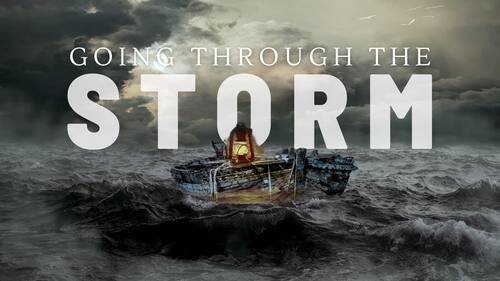
Life has a peculiar way of bringing us to our knees. Sometimes it's through a doctor's diagnosis that changes everything. Other times it's a financial crisis that seems insurmountable. Perhaps it's a relationship fracturing before our eyes, or an addiction that's taken hold. Whatever form it takes, we all eventually face our storm.
The question isn't whether storms will come—they will. The real question is: who do we turn to when they arrive?
The question isn't whether storms will come—they will. The real question is: who do we turn to when they arrive?
The Problem of Belief
In John 20, we encounter Thomas, forever labeled as "doubting Thomas" for his skepticism about Christ's resurrection. His demand was simple but profound: "Except I shall see in his hands the print of the nails, and put my finger into the print of the nails, and thrust my hand into his side, I will not believe."
Thomas needed proof. He needed evidence. He needed something tangible before he could trust.
Jesus graciously appeared to Thomas and offered exactly what he requested. But then came the penetrating words that echo through the centuries: "Thomas, because thou hast seen me, thou hast believed: blessed are they that have not seen, and yet have believed."
Here's the uncomfortable truth: many of us are like Thomas. We demand to see before we believe. We want God to prove Himself according to our terms, on our timeline, with evidence that satisfies our rational minds. We'll trust the doctor with his degree, the financial advisor with his credentials, even the weatherman with his forecast—but when God asks us to simply believe, we hesitate.
Thomas needed proof. He needed evidence. He needed something tangible before he could trust.
Jesus graciously appeared to Thomas and offered exactly what he requested. But then came the penetrating words that echo through the centuries: "Thomas, because thou hast seen me, thou hast believed: blessed are they that have not seen, and yet have believed."
Here's the uncomfortable truth: many of us are like Thomas. We demand to see before we believe. We want God to prove Himself according to our terms, on our timeline, with evidence that satisfies our rational minds. We'll trust the doctor with his degree, the financial advisor with his credentials, even the weatherman with his forecast—but when God asks us to simply believe, we hesitate.
The Storms That Strip Us Down
The Apostle Paul found himself caught in a literal storm in Acts 27. Here was a man following God's direct command to go to Rome, yet he encountered a tempest that threatened to destroy everything. The ship was "exceedingly tossed," and the crew began to lighten the load, throwing cargo overboard to survive.
This image is powerful because it reflects a spiritual reality: storms force us to let go of what we're carrying.
Think about what happens when a tornado tears through a community. It doesn't discriminate between the expensive and the cheap, the sentimental and the practical. Everything gets scattered. Survivors often speak of the strange clarity that comes afterward—realizing what truly matters when everything else is stripped away.
Paul understood this principle when he wrote in 1 Timothy 6:7-8: "For we brought nothing into this world, and it is certain we can carry nothing out. And having food and raiment let us therewith be content."
Storms and stuff don't go together. You can accumulate possessions, achievements, status, and credentials, but when the storm hits, none of it provides shelter. The garage full of things you might need someday, the closets packed with purchases that seemed important at the time, the accomplishments you've built your identity around—all of it becomes irrelevant when you're fighting for
This image is powerful because it reflects a spiritual reality: storms force us to let go of what we're carrying.
Think about what happens when a tornado tears through a community. It doesn't discriminate between the expensive and the cheap, the sentimental and the practical. Everything gets scattered. Survivors often speak of the strange clarity that comes afterward—realizing what truly matters when everything else is stripped away.
Paul understood this principle when he wrote in 1 Timothy 6:7-8: "For we brought nothing into this world, and it is certain we can carry nothing out. And having food and raiment let us therewith be content."
Storms and stuff don't go together. You can accumulate possessions, achievements, status, and credentials, but when the storm hits, none of it provides shelter. The garage full of things you might need someday, the closets packed with purchases that seemed important at the time, the accomplishments you've built your identity around—all of it becomes irrelevant when you're fighting for
The Purpose Behind the Pain
Here's what many miss: storms aren't random acts of chaos. They're not evidence that God has lost track of your address or forgotten your name. Sometimes you're in the storm precisely because God allowed it.
That's a hard pill to swallow, isn't it? We want to believe that following God means smooth sailing, that righteousness equals comfort, that faith provides immunity from hardship. But the reality is different.
The only people who never experience storms are those who aren't going anywhere. Stagnant water doesn't get stirred up. A life without movement, growth, or purpose remains undisturbed—but also dead.
If you're in a storm, it might mean you're actually headed somewhere. God has a destination in mind for you, but the journey requires transformation. The storm isn't punishment—it's preparation. It's not abandonment—it's refinement.
Consider what storms accomplish:
They reveal what's truly important
They strip away the superficial
They expose where we've placed our trust
They force us to cry out for help
They make us lighter, less burdened by things that don't matter
That's a hard pill to swallow, isn't it? We want to believe that following God means smooth sailing, that righteousness equals comfort, that faith provides immunity from hardship. But the reality is different.
The only people who never experience storms are those who aren't going anywhere. Stagnant water doesn't get stirred up. A life without movement, growth, or purpose remains undisturbed—but also dead.
If you're in a storm, it might mean you're actually headed somewhere. God has a destination in mind for you, but the journey requires transformation. The storm isn't punishment—it's preparation. It's not abandonment—it's refinement.
Consider what storms accomplish:
They reveal what's truly important
They strip away the superficial
They expose where we've placed our trust
They force us to cry out for help
They make us lighter, less burdened by things that don't matter
The Investment of Faith
Every time we choose to worship in the midst of difficulty, we're making an investment. Every prayer whispered through tears, every moment of praise when nothing makes sense, every decision to show up when it would be easier to stay home—these are deposits in the kingdom of God.
Hebrews 11:6 reminds us that "without faith it is impossible to please him: for he that cometh to God must believe that he is, and that he is a rewarder of them that diligently seek him."
Notice the promise: God is a rewarder of those who diligently seek Him. Not those who have it all figured out. Not those who never doubt or struggle. Not those with perfect theology or flawless execution. But those who seek Him—especially when it's hard, especially in the storm, especially when nothing makes sense.
The problem many face in their storm is simple: they're seeking everything except God. They're calling friends for advice, researching solutions online, trying to fix things through their own strength and wisdom. All the while, God is saying, "Just believe in Me. Trust Me. Let Me handle this."
Hebrews 11:6 reminds us that "without faith it is impossible to please him: for he that cometh to God must believe that he is, and that he is a rewarder of them that diligently seek him."
Notice the promise: God is a rewarder of those who diligently seek Him. Not those who have it all figured out. Not those who never doubt or struggle. Not those with perfect theology or flawless execution. But those who seek Him—especially when it's hard, especially in the storm, especially when nothing makes sense.
The problem many face in their storm is simple: they're seeking everything except God. They're calling friends for advice, researching solutions online, trying to fix things through their own strength and wisdom. All the while, God is saying, "Just believe in Me. Trust Me. Let Me handle this."
The Shelter in the Storm
When a tornado warning sounds, people in vulnerable homes seek shelter elsewhere. They go to basements, storm cellars, or the homes of those with stronger foundations. They recognize their own structure isn't sufficient for what's coming.
Some of you are in a storm right now, and you've been trying to weather it in your own strength. You've been standing in a house built on sand, wondering why everything keeps shaking. The invitation today is to find shelter in the only foundation that cannot be moved.
This isn't about religious performance or checking boxes. It's not about being perfect or having all the answers. It's about acknowledging that you can't do this alone, that your storm is bigger than your resources, that your strength isn't sufficient.
Some of you are in a storm right now, and you've been trying to weather it in your own strength. You've been standing in a house built on sand, wondering why everything keeps shaking. The invitation today is to find shelter in the only foundation that cannot be moved.
This isn't about religious performance or checking boxes. It's not about being perfect or having all the answers. It's about acknowledging that you can't do this alone, that your storm is bigger than your resources, that your strength isn't sufficient.
Coming Out Lighter
Here's the promise for those in the storm: you will come out lighter. Not lighter as in happier necessarily, though joy often follows. Lighter as in less burdened. The things you were carrying that God never asked you to carry will be gone. The pride that kept you from asking for help will be stripped away. The self-sufficiency that prevented you from depending on God will be exposed as the illusion it always was.
Paul experienced something so profound in 2 Corinthians 12 that he couldn't even articulate whether he was in his body or out of it. He encountered the presence of God in such a powerful way that physical reality became secondary. He heard "unspeakable words, which is not lawful for a man to utter."
That same presence is available to those who believe, who seek, who surrender in the midst of their storm. It's not a one-time experience but a continual source of strength for those who learn to walk by faith rather than by sight.
Paul experienced something so profound in 2 Corinthians 12 that he couldn't even articulate whether he was in his body or out of it. He encountered the presence of God in such a powerful way that physical reality became secondary. He heard "unspeakable words, which is not lawful for a man to utter."
That same presence is available to those who believe, who seek, who surrender in the midst of their storm. It's not a one-time experience but a continual source of strength for those who learn to walk by faith rather than by sight.
The Invitation
The Invitation
The altar is always open. Not just in church buildings, but in the quiet moments of your day, in the middle of sleepless nights, in the car on your commute, wherever you are. God doesn't need you to clean yourself up first or figure everything out or wait until you're worthy.
Come as a child. Cry if you need to. Admit you can't handle this alone. Repent of trying to be your own savior. Ask for His Spirit to fill you, guide you, strengthen you, and carry you through.
The storm you're in might be the very thing that finally brings you to the place where God can truly reach you. Stop fighting it. Stop trying to fix it on your own. Believe that He is who He says He is, and watch Him prove faithful once again.
Your storm has a purpose. Your valley has meaning. And on the other side, you'll emerge lighter, stronger, and more dependent on the One who controls the wind and the waves.
Believe.
The altar is always open. Not just in church buildings, but in the quiet moments of your day, in the middle of sleepless nights, in the car on your commute, wherever you are. God doesn't need you to clean yourself up first or figure everything out or wait until you're worthy.
Come as a child. Cry if you need to. Admit you can't handle this alone. Repent of trying to be your own savior. Ask for His Spirit to fill you, guide you, strengthen you, and carry you through.
The storm you're in might be the very thing that finally brings you to the place where God can truly reach you. Stop fighting it. Stop trying to fix it on your own. Believe that He is who He says He is, and watch Him prove faithful once again.
Your storm has a purpose. Your valley has meaning. And on the other side, you'll emerge lighter, stronger, and more dependent on the One who controls the wind and the waves.
Believe.
Recent
Archive
2026
Categories
no categories
No Comments